
Exploring the 30:2 CPR Ratio: Essential Training in Pasadena
May 4
15 min read
Updated: May 5

Key Highlights
Here are the key takeaways from this guide: The 30:2 CPR ratio means performing 30 chest compressions followed by 2 rescue breaths. This ratio is the standard for adult cardiopulmonary resuscitation (CPR) for a single rescuer. Typically, you should perform about 5 cycles of 30:2 CPR (about 2 min) before reassessing the person's condition for signs of life or if professional help has arrived.
The 30:2 CPR ratio means performing 30 chest compressions followed by 2 rescue breaths.
This ratio is the standard for adult cardiopulmonary resuscitation (CPR) for a single rescuer.
The goal is to circulate oxygenated blood during cardiac arrest to protect vital organs.
While this is the standard, the ratio can change for children and infants, especially with two rescuers.
Proper CPR training in Pasadena is crucial to learn and apply these life-saving techniques correctly.
Introduction
Have you ever wondered what you would do in a medical emergency? When someone suffers a sudden cardiac arrest, their heart stops beating, and every second counts. Cardiopulmonary resuscitation (CPR), a combination of chest compressions and rescue breaths, can be the difference between life and death. Understanding the basics, especially the 30:2 CPR ratio, empowers you to act confidently. This guide will explain this critical life-saving technique and why CPR training in Pasadena, CA, is a vital skill for everyone in our community.
30:2 CPR Ratio Explained
The 30:2 CPR ratio is a cornerstone of basic life support. It’s a simple yet powerful sequence: 30 chest compressions followed by two rescue breaths. This pattern is designed to maintain blood flow and deliver oxygen to the brain and other vital organs until professional help arrives.
Mastering this ratio is a key part of any CPR training program. It ensures that a person in cardiac arrest has the best possible chance of survival. Let's explore what this ratio means in more detail and the science that makes it so effective.
Defining the 30:2 CPR Ratio in Basic Life Support
In basic life support, the 30:2 CPR ratio is the standardized sequence of actions you perform on an adult who is unresponsive and not breathing normally. It literally means you deliver 30 continuous chest compressions and then provide two rescue breaths. This cycle is repeated over and over.
This specific ratio is recommended by major health organizations, including the American Heart Association, as the most effective approach for a single rescuer. The number of chest compressions is balanced with the number of breaths to maximize the benefits of CPR.
The goal is to mimic the heart's natural function of pumping blood and the lungs' function of providing oxygen. By following the 30:2 ratio, you can provide critical support that bridges the gap between the onset of cardiac arrest and the arrival of advanced medical care.
Purpose and Science Behind the Ratio
The science behind the 30:2 ratio in cardiopulmonary resuscitation is focused on maximizing effectiveness for a single rescuer. The 30 chest compressions are designed to build up enough pressure to circulate blood to the brain and other vital organs. Stopping for breaths too frequently would cause this pressure to drop, making the compressions less effective.
The two rescue breaths provide a much-needed supply of oxygen. During cardiac arrest, the body quickly uses up its oxygen reserves. Without rescue breaths, the blood being circulated by compressions would have very little oxygen, leading to a lack of oxygen in vital tissues and potential brain damage within minutes.
Over the years, research has shown that the 30:2 ratio strikes the best balance. It ensures consistent blood flow from compressions while minimizing interruptions for breathing. This balance is what increases the chances of survival and a better outcome for the person in need.
American Heart Association Guidelines for CPR
The American Heart Association (AHA) provides the leading guidelines for CPR and emergency cardiovascular care in the United States. These guidelines are based on extensive scientific research and are updated periodically to ensure the techniques taught are as effective as possible. For adult CPR performed by a single rescuer, the AHA firmly recommends the 30:2 ratio.
This standard simplifies training for the general public and ensures a consistent response in an emergency. The AHA emphasizes pushing hard and fast during compressions and delivering effective rescue breaths that make the chest rise. Learning these guidelines in a certified CPR class is the best way to prepare yourself to help.
Here’s a simple breakdown of the AHA's basic life support sequence for adults:
Step | Action | Description |
C | Compressions | Push hard and fast in the center of the chest. |
A | Airway | Tilt the head back and lift the chin to open the airway. |
B | Breathing | Give two rescue breaths, each lasting one second. |
Understanding Chest Compressions and Rescue Breaths
Performing CPR is more than just knowing the numbers; it's about technique. Both chest compressions and rescue breaths must be done correctly to be effective. The quality of your actions directly impacts the person's chance of survival. Proper CPR training is essential to learn the right compression depth and the correct way to deliver breaths.
This section will guide you through the specifics of each component. We will cover how to perform powerful chest compressions and how to give proper rescue breaths, ensuring you understand the mechanics behind this life-saving procedure.
How to Perform Effective Chest Compressions
To perform effective chest compressions, you first need to position the person correctly. They should be lying on their back on a firm, flat surface. This prevents the body from bouncing and ensures your compressions are directed into the chest.
Next, find the correct hand placement. Place the heel of your hand on the center of the person's chest, on the lower half of the breastbone. Place your other hand on top of the first and interlock your fingers. Keep your arms straight and position your shoulders directly over your hands. This allows you to use your body weight, not just your arm strength, to deliver compressions.
Follow these key points for effective compressions:
Rate: Push at a rate of 100 to 120 compressions per minute. Think of the beat to the song "Stayin' Alive."
Depth: For an adult, the compression depth should be at least 2 inches (5 cm) but no more than 2.4 inches (6 cm).
Recoil: Allow the chest to fully recoil or rise back to its normal position after each compression. This allows the heart to refill with blood.
Proper Technique for Rescue Breathing
After performing 30 chest compressions, it’s time to provide oxygen through rescue breaths. The first step is to open the airway. Use the head-tilt, chin-lift maneuver by placing one hand on the person's forehead and gently tilting the head back. Use the fingers of your other hand to lift the chin.
With the airway open, you are ready to deliver the breaths. A proper seal is essential to ensure the air goes into the lungs and not out into the environment.
Follow these steps for proper rescue breathing:
Pinch the person's nose shut.
Take a normal breath (not a deep one) and cover the person's mouth with yours to create an airtight seal.
Give one breath lasting about one second, just enough to make the chest rise visibly.
Watch for the chest rise. If it rises, give a second breath. If it doesn't, reposition the head and try again before resuming compressions.
Coordinating Compressions and Breaths Using 30:2
The coordination between chest compressions and rescue breaths is what makes the 30:2 ratio work. The key is to move smoothly and quickly between the two actions to minimize interruptions in blood flow. After delivering your 30th compression, you should immediately move to open the airway and provide the two rescue breaths.
The goal is to keep the pause between the last compression and the first breath as short as possible, ideally under 10 seconds. The faster you can switch from compressions to breaths and back again, the more effective your CPR will be. This is because every pause in chest compressions causes blood pressure to drop significantly.
Maintaining the correct breath ratio is also vital. Do not give more than two breaths. Over-ventilating can be harmful, as it can increase pressure inside the chest and reduce the blood returning to the heart. Stick to the 30 compressions, 2 breaths cycle until help arrives or the person shows signs of life.
Step-by-Step Guide to Performing 30:2 CPR
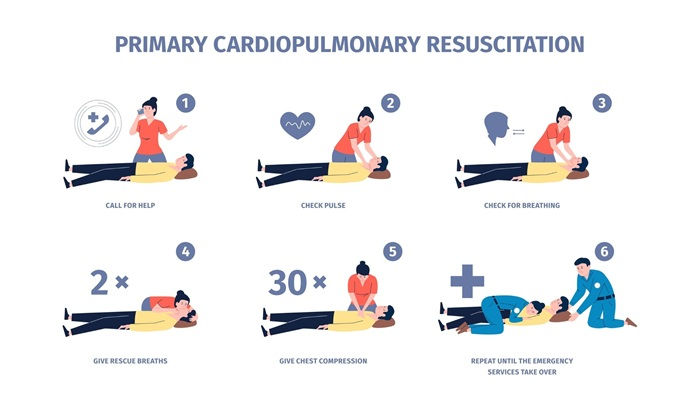
Knowing the components of CPR is one thing, but putting them together in a real emergency requires a clear, step-by-step approach. When you encounter someone who may need CPR, your response should be quick, calm, and methodical. Following a structured process ensures you don't miss any critical steps.
This section will walk you through the entire sequence of performing 30:2 CPR on an adult, from checking the scene to working with an AED. This step-by-step guide, reinforced by proper CPR training, will give you the confidence to act effectively.
Adult CPR Steps Using the 30:2 Ratio
When you encounter a collapsed adult, your first step is to ensure the scene is safe for you and the person. Then, check for a response by tapping their shoulder and shouting, "Are you OK?" If they don't respond, you need to act fast.
Shout for help and call 911 immediately. If someone else is nearby, instruct them to call 911 and find an automated external defibrillator (AED). If you are alone, put your phone on speaker mode to talk to the dispatcher while you begin CPR. Check for breathing for no more than 10 seconds. If they are not breathing or are only gasping, it's time to start CPR.
Here are the adult CPR steps using the 30:2 ratio:
Position your hands in the center of your chest.
Perform 30 chest compressions at a rate of 100-120 per minute and a depth of 2-2.4 inches.
Open the airway and give two rescue breaths, each lasting one second.
Immediately resume chest compressions. Continue this cycle of 30 compressions and 2 breaths.
Switching Between Compressions and Breaths
The transition from chest compressions to rescue breaths is a critical moment in the CPR sequence. Efficiently switching between these two actions is vital to maintaining the momentum of your life-saving efforts. The goal is to minimize the time your hands are off the chest.
After you complete the 30th compression, you should seamlessly move to the person's head. Quickly perform the head-tilt, chin-lift maneuver, pinch the nose, and deliver the two breaths. The entire process of giving two breaths should take only a few seconds.
As soon as the second breath is delivered (or if the breaths don't go in), you must immediately return your hands to the chest and start the next cycle of 30 compressions. This smooth coordination is a skill that is perfected through hands-on CPR training, where you can practice the rhythm and timing until it becomes second nature.
Using AED in Conjunction with CPR
An Automated External Defibrillator (AED) is a life-saving device that can restore a normal heart rhythm during certain types of cardiac arrest. When an AED becomes available, it should be used immediately in conjunction with CPR. It is a critical component of first aid.
As soon as the AED arrives, turn it on. The device will give you clear, voice-prompted instructions. You will need to attach the pads to the person's bare chest as shown in the diagrams on the pads themselves. While one person is setting up the AED, another should continue with chest compressions.
Follow these steps when using an AED:
Turn on the AED and follow the voice prompts.
Attach the electrode pads to the person's bare chest.
When the AED is ready to analyze the heart rhythm, ensure no one is touching the person.
If the AED advises a shock, again, ensure no one is touching the person and press the shock button. Immediately after the shock, resume high-quality CPR, starting with chest compressions.
30:2 CPR Ratio in Adults, Children, and Infants
While the 30:2 ratio is the standard for adult CPR, you might be wondering if it applies to everyone. The answer is nuanced. The principles of CPR are the same across all age groups, but the specific ratios and techniques are modified for children and infants to account for their smaller bodies and different physiology.
Understanding these differences is crucial for providing effective care. This section will compare the application of the 30:2 ratio in adult CPR to the specific guidelines for pediatric basic life support and infant CPR.
Applying the Ratio to Adults
For adult CPR, the 30:2 ratio is the universal standard when you are the only rescuer. This applies to anyone who has gone through puberty. The cycle of 30 chest compressions followed by two rescue breaths is consistent, whether you are a trained healthcare provider or a layperson who has taken a CPR class.
The reason for this consistency is to make the process as simple and memorable as possible in a high-stress situation. Research has shown that in adults, cardiac arrest is most often due to a heart problem. Therefore, the immediate priority is to circulate blood via high-quality chest compressions.
The two rescue breaths are still vital to provide oxygen, but the emphasis is on the compressions. By sticking to the 30:2 ratio for adult CPR, you are following the most effective and widely accepted protocol to increase the chances of survival.
Modifications for Children
When it comes to pediatric basic life support for children (from age 1 to puberty), the 30:2 ratio of chest compressions to rescue breaths still applies if you are a single rescuer. This makes it easier for rescuers to remember the steps across different age groups in a solo situation.
However, a key modification occurs when a second rescuer is present. In a two-rescuer scenario for a child, the breath ratio changes to 15:2. This means 15 compressions followed by 2 breaths. This change is made because respiratory problems are a more common cause of cardiac arrest in children. The 15:2 ratio delivers more frequent breaths to address potential oxygen issues.
Additionally, the technique for compressions is adjusted. You may use one or two hands depending on the child's size, and the compression depth is about 2 inches, or one-third the depth of the chest.
Differences in Infant CPR Ratios
Infant CPR (for babies under 1 year old) requires specific techniques to protect their delicate bodies. For a single rescuer, the ratio remains 30 compressions to 2 breaths, similar to adults and children, to maintain consistency and ease of recall.
However, just like with children, the ratio changes to 15:2 when a second rescuer is available. The technique for infant CPR is also very different. Compressions are delivered using two fingers in the center of the infant's chest, just below the nipple line. The depth is about 1.5 inches, or one-third the depth of the infant's chest. It is crucial to avoid excessive pressure.
Rescue breaths for an infant are gentle puffs of air, just enough to make the chest rise. You cover both the baby's mouth and nose with your mouth. These modifications are critical for providing safe and effective CPR to an infant.
When and Why to Use the 30:2 Ratio During Resuscitation

Knowing the 30:2 ratio is important, but it's just as crucial to know when to use it. This specific CPR technique is designed for a very particular emergency: cardiac arrest. Using it at the right time is a key part of resuscitation efforts and can be the most critical first aid someone receives.
This section will help you identify the situations where 30:2 CPR is necessary. We'll discuss how to recognize cardiac arrest and cover any special circumstances or exceptions where the standard protocol might need to be adjusted. This knowledge ensures you can act appropriately and effectively.
Recognizing Cardiac Arrest Situations
Recognizing sudden cardiac arrest is the first step toward saving a life. When a person is in cardiac arrest, they will collapse suddenly, become unresponsive, and will not breathe normally. They may have no breathing at all, or they may exhibit agonal gasps, which can look like snoring, snorting, or gasping for air. These are not signs of normal breathing.
As bystanders, it's not your job to diagnose the exact medical problem. Your role is to recognize these clear signs and act quickly. If you find someone who is unresponsive and not breathing normally, you should assume it is cardiac arrest and start CPR.
Here are the key signs to look for:
Unresponsiveness: The person does not respond to tapping or shouting.
No Normal Breathing: The person is not breathing or is only gasping.
Sudden Collapse: The person suddenly falls or collapses.
Waiting for the ambulance without taking action can be fatal, as the brain and vital organs are being starved of oxygen.
Exceptions and Special Circumstances
While the 30:2 ratio is the standard for most CPR situations, there are some exceptions and special circumstances. One major exception occurs once advanced life support professionals arrive and place an advanced airway, such as an endotracheal tube. With an advanced airway in place, compressions and breaths are no longer cycled. Compressions become continuous at a rate of 100-120 per minute, and one breath is given every 6 seconds without pausing compressions.
Another consideration is for victims of drowning. Since the primary cause of cardiac arrest in drowning is a lack of oxygen, resuscitation efforts may prioritize rescue breaths initially to address this. However, for most lay rescuers, the recommendation is to stick with the standard 30:2 protocol unless specifically trained otherwise.
In cases involving a pregnant person, hand placement for compressions may need to be adjusted higher on the breastbone to avoid pressure on the abdomen. However, the 30:2 ratio itself remains the same.
Adjustments for Single and Two-Rescuer Scenarios
The CPR ratio can change depending on the number of rescuers present, especially in pediatric basic life support. For a single rescuer, the 30:2 ratio of compressions to rescue breaths is consistent across all age groups—adult, child, and infant. This consistency simplifies the process when you're on your own.
However, when a second rescuer arrives, the protocol can be optimized. For adults, the ratio remains 30:2 even with two rescuers. The rescuers simply switch roles every two minutes (or five cycles) to prevent fatigue, with one person doing compressions and the other giving breaths.
The significant change occurs with children and infants. With two rescuers, the ratio shifts to 15:2. This provides more frequent ventilations, which is critical for young victims whose cardiac arrests are often respiratory-driven.
Single Rescuer: 30:2 ratio for adults, children, and infants.
Two Rescuers (Adult): 30:2 ratio, with rescuers switching roles every 2 minutes.
Two Rescuers (Child/Infant): 15:2 ratio, with rescuers switching roles every 2 minutes.
Common Challenges in Maintaining the 30:2 Ratio
Performing CPR is physically and mentally demanding. Even with the best intentions, rescuers can face challenges in maintaining the correct 30:2 ratio and performing high-quality chest compressions and rescue breaths. Issues like fatigue and ensuring accuracy can impact the effectiveness of your efforts.
Recognizing these potential hurdles is the first step to overcoming them. In this section, we will discuss common difficulties like managing time and fatigue, and the importance of accuracy. We'll also provide solutions and tips that are emphasized in quality CPR training programs.
Time Management and Fatigue
One of the biggest challenges during CPR is rescuer fatigue. Performing chest compressions at the correct rate and depth is hard work. As fatigue sets in, the quality of compressions can quickly decline. They may become too slow, too shallow, or you may start leaning on the chest, which prevents full recoil.
Time management is also a factor. The need to switch between compressions and breaths requires you to be efficient to minimize interruptions. It can be difficult to keep track of the cycles and know when to switch roles if a second rescuer is present, especially in a chaotic environment.
These challenges highlight why having more than one trained rescuer on the scene is so beneficial. Being able to switch the role of the compressor every two minutes is the best way to combat fatigue and ensure that the person receiving CPR gets continuous, high-quality care.
Ensuring Accuracy and Consistency
Maintaining accuracy and consistency is paramount for effective CPR. It's easy for the rate and depth of chest compressions to vary, especially as you get tired. Giving rescue breaths that are too forceful or too frequent is another common mistake that can be harmful.
The stress of the situation can make it difficult to focus on the details. Are you pushing deep enough? Are you pushing fast enough? Are you allowing the chest to fully recoil? Is each breath only one second long? These are all critical elements that require precision.
Here are areas where accuracy is crucial:
Compression Rate: Consistently hitting 100-120 compressions per minute.
Compression Depth: Ensuring each push is deep enough (2-2.4 inches for adults).
Chest Recoil: Allowing the chest to fully rise between compressions.
Breath Volume: Giving just enough air to make the chest visibly rise.
This is where formal CPR training becomes invaluable, as it provides the muscle memory and feedback needed to perform with consistency.
Solutions and Tips from CPR Training Pasadena, CA
The best way to overcome the challenges of performing CPR is through high-quality, hands-on training. A great CPR training course in Pasadena, CA, will equip you with practical solutions and tips to maintain consistency and manage fatigue during a real emergency.
Instructors will teach you techniques to conserve energy and use your body weight effectively for chest compressions. You'll practice on manikins that provide real-time feedback on your compression rate and depth, helping you build the muscle memory needed for accuracy.
Here are some solutions emphasized in our CPR training programs in Pasadena:
Count Aloud: Counting your compressions out loud helps you keep pace and signals to others when a switch is needed.
Use a Metronome or Song: Use a mental metronome or the beat of a familiar song like "Stayin' Alive" to maintain a consistent rate of 100-120 compressions per minute.
Practice with Feedback: Regular practice in a training environment builds confidence and skill.
Teamwork: If another rescuer is available, communicate clearly and switch roles every two minutes to prevent fatigue and maintain high-quality CPR.
Conclusion
In conclusion, mastering the 30:2 CPR ratio is vital for anyone looking to be prepared in emergencies. This life-saving technique can make a significant difference in the outcome of cardiac arrest cases. By understanding how to coordinate chest compressions and rescue breaths effectively, you can provide critical support until professional help arrives. Remember, practice is key to building confidence, so consider enrolling in CPR training in Pasadena, CA, to gain hands-on experience. Our expert instructors are ready to equip you with the necessary skills and knowledge to respond effectively in emergencies. Don’t wait—take the first step toward being a lifesaver today!
Frequently Asked Questions
What does the 30:2 CPR ratio mean in basic life support?
The 30:2 CPR ratio in basic life support means you perform a cycle of 30 chest compressions followed by two rescue breaths. This standardized sequence is designed to circulate oxygenated blood to the brain and other vital organs during cardiac arrest, maximizing the effectiveness of CPR.
How many CPR cycles should I perform before checking for a response?
You should not stop CPR to check for a response. Continue performing cycles of 30 chest compressions and 2 rescue breaths without interruption until you see obvious signs of life (like movement or normal breathing), an AED is ready to analyze, or emergency medical personnel take over.
Is the 30:2 CPR ratio the same in all emergency situations?
For a single rescuer, the 30:2 ratio is the standard for adults, children, and infants in a cardiac arrest emergency. However, the ratio changes to 15:2 for children and infants when a second rescuer is present to provide more frequent rescue breaths.
What is the significance of the 30:2 CPR ratio in emergency situations?
The significance of the 30:2 CPR ratio is that it balances the need for continuous chest compressions to maintain blood flow with the need for rescue breaths to provide oxygen. This combination has been scientifically proven to provide the best chance of survival in many cardiac arrest emergencies.
How can I find CPR training courses that teach the 30:2 ratio in Pasadena?
You can find high-quality CPR training in Pasadena that teaches the 30:2 ratio and other essential skills by searching for local providers online. Look for courses that offer hands-on practice with chest compressions and rescue breaths and provide American Heart Association or equivalent certification upon completion.


Comments