
CPR for Grandparents and Caregivers: Why Every Family Member Should Be Certified
Oct 21
11 min read
Key Highlights
● CPR training helps family members act fast during cardiac arrest and other home emergencies.
● Grandparents and caregivers often watch children or older adults, so CPR certification adds real protection.
● Modern classes teach updated chest compressions, rescue breaths, choking relief, AED use, and first aid.
● Infant CPR, child CPR, and adult CPR use different techniques and hand placement.
● Hands-on practice builds muscle memory that videos alone cannot provide.
● 30:2 Rescue LLC offers family-friendly options in Pasadena, including classroom, blended, and mobile training.
Introduction
Cardiopulmonary resuscitation is a simple skill that can make a major difference before emergency medical services arrive. If you care for grandchildren, aging parents, or another family member, CPR training prepares you to respond with less panic and more purpose.
That matters because home emergencies can happen without warning. Learning through a trusted provider with American Heart Association and American Red Cross training options gives you current, practical skills you can use in real life.
Why Every Family Member—Especially Grandparents and Caregivers—Should Learn CPR

Every family member should learn CPR because emergencies often happen at home, before professional help arrives. A CPR course gives you a clear plan for those first critical moments, which is especially important when caring for young children, older adults, or someone with medical risks.
For grandparents and caregivers, CPR certification adds more than a card. It adds readiness, updated first aid knowledge, and confidence. Training from programs aligned with Red Cross or AHA standards helps you protect loved ones with skills that are current and age-appropriate.
The Unique Role of Grandparents and Family Caregivers in Emergencies
Grandparents and family caregivers are often the first people present during medical emergencies at home. That is why CPR skills and emergency preparedness matter so much for this group.
In many families, grandparents help with school pickup, babysitting, meals, and daily supervision. Family caregivers may also support older adults with chronic health issues. If cardiac arrest, choking, or breathing trouble happens, you may be the one who must act before first responders arrive.
That role can feel heavy, but training helps. Instead of freezing, you learn what to check, when to call 911, and how to begin care. CPR certification turns concern into a practical response. It also helps parents and relatives feel safer when a trained family member is in charge.
How CPR Training Helps Protect Children, Infants, and Older Adults at Home
CPR training helps protect loved ones at home by teaching the right response for each age group. Infant CPR, child CPR, and adult CPR are not the same, and that difference matters.
Infants are fragile, so compressions and rescue breaths must be gentle and precise.
Children need adjusted force and hand placement. Adults require stronger chest compressions to help maintain blood flow to vital organs during cardiac arrest. A good class teaches these CPR techniques clearly and lets you practice them.
This is one reason families benefit so much from training. You are not learning one generic method. You are learning how to respond to the people you actually care for each day. That makes your actions safer, faster, and more effective in a real emergency.
Common Emergency Scenarios Faced by Family Members
Family members face many emergencies at home, and CPR training helps you respond without losing valuable time. Quick action can support blood flow until emergency services take over.
These situations are not rare or dramatic movie scenes. They are everyday risks that can happen during meals, bath time, play, or routine care. Learning what to do makes your home safer and helps you feel more prepared.
Common examples include:
● A child choking on food or a small object and needing the Heimlich maneuver
● An infant who becomes unresponsive and needs immediate CPR
● An older adult with sudden cardiac arrest at home
● A person who is not breathing normally after a medical event
● A family member needing help while waiting for medical help
Illustrative example: A grandmother in Pasadena is watching her grandson during lunch when he suddenly stops responding after choking. Because she completed family CPR training, she recognizes the emergency, starts the right choking response, and calls 911 quickly.
Key Benefits of CPR Certification for Families in Pasadena
CPR certification helps Pasadena families create a safer environment at home, during childcare, and while supporting older relatives. It gives you CPR skills you can use right away when seconds count.
Just as important, certification improves readiness across the whole family. Better response can support survival rates by reducing delays before care begins. In a busy home, that kind of preparation brings both practical value and peace of mind. The next sections explain how that confidence shows up in real emergencies.
Peace of Mind When Caring for Loved Ones
CPR training gives families peace of mind because it replaces uncertainty with a simple action plan. You know what to do, and that changes how you care for loved ones.
Parents often feel more comfortable leaving children with grandparents or sitters who have current training. The same is true for families caring for older adults. When you understand current CPR guidelines and basic emergency preparedness, people trust your care more fully.
That peace of mind matters in daily life, not only during a crisis. You can focus on your child’s life, your parent’s needs, or your caregiving routine without wondering if you would know what to do. Training does not remove risk, but it helps you meet it with more calm and control.
Faster, More Confident Response During Cardiac Emergencies
CPR certification helps caregivers respond faster during cardiac arrest because training reduces hesitation. When seconds count, a few clear steps can guide your response.
In class, you practice the sequence for checking the scene, calling for help, and starting care. That repetition matters. It helps you remember when to begin chest compressions, when rescue breaths are used, and how to stay focused while waiting for emergency medical services.
Training supports confidence in these ways:
● You recognize an emergency sooner
● You start immediate CPR with less delay
● You remember age-based differences more clearly
● You feel steadier under pressure
Hands-only CPR overview for adults:
Check if the person is unresponsive and not breathing normally.
Call 911 or direct someone else to call.
Place your hands in the center of the chest.
Push hard and fast at a steady rate until help arrives or an AED is ready.
Hands-on training is still essential because real practice improves technique and muscle memory.
What Makes 30:2 Rescue LLC’s CPR Classes Right for Grandparents and Caregivers?

30:2 Rescue LLC is a strong fit for grandparents and caregivers because its classes combine current instruction with practical, hands-on learning. You get a CPR course built for real emergencies, not just theory.
The business serves Pasadena, the San Gabriel Valley, and Southern California as an authorized training center for both the American Heart Association and the American Red Cross. That means you can choose certified CPR training from trusted organizations while learning in a supportive setting made for everyday people.
Accredited American Red Cross and American Heart Association Training
Accredited training matters because CPR guidelines change, and your class should reflect current standards. 30:2 Rescue LLC is authorized for both American Red Cross and American Heart Association training.
That gives families a reliable path to CPR certification from nationally known organizations. It also helps if you want a course that employers, schools, or care settings commonly recognize. For non-healthcare learners, CPR, First Aid, and AED classes fit parents, grandparents, teachers, babysitters, and caregivers.
If you are a healthcare provider, BLS is offered as a separate class. This keeps training focused and appropriate for each audience. For families, the benefit is simple: you learn the right material, at the right level, with current CPR guidelines and hands-on practice built in.
Flexible Class Options—In-Person, Blended, and Mobile CPR Training in Southern California
Flexible scheduling makes CPR training easier for families to complete. 30:2 Rescue offers options that work with busy schedules while still requiring hands-on skills practice.
You can choose an instructor-led classroom session, a blended format with an online module followed by a short in-person skills session, or mobile CPR training at your home, office, or facility on request. There are no online-only certification classes because real skills must be practiced in person.
Class options include:
● Instructor-led in-person classroom training
● Blended learning with online study plus in-person skills testing
● Mobile CPR training across Southern California for homes, offices, or facilities
● Evening and weekend options for added convenience
Families who want to train together can ask about a mobile class. Group discounts are available for six or more people, which is useful for large families, caregiver teams, or neighborhood groups.
Beginner’s Guide: How to Get Started with CPR and First Aid Certification
Getting started with CPR and First Aid certification is easier than many families expect. You do not need a medical background to learn these CPR skills.
A simple beginner's guide is to choose the right class, register for a format that fits your schedule, attend the hands-on session, complete the skills assessment, and receive your certification by email. At 30:2 Rescue, digital e-cards are sent within 10 minutes of course completion, which makes the process fast and practical.
What You’ll Need Before Attending a CPR Class
You do not need special experience before attending a CPR class. You mainly need the right course, a little time, and a willingness to practice.
Most family learners should choose CPR, First Aid, and AED training rather than BLS, which is meant for healthcare providers. Classes can take as little as two to three hours depending on the course. That makes it realistic for grandparents, babysitters, and parents.
Helpful things to have in mind before class:
● Know whether you need family-focused CPR or healthcare-provider BLS
● Pick a schedule that works, including evening or weekend options
● Think about where your certification card will be useful at home or work
After class, many families also review their home first aid kit and emergency contact plan.
Step-by-Step Guide to Becoming CPR Certified as a Family Caregiver
Becoming CPR certified as a family caregiver follows a clear process. The steps are simple, and each one builds practical readiness.
You first select the right course, then complete the class in the format you chose. After that, you practice the essential skills on training equipment, complete the skills assessment, and receive your certification. The goal is not just a card. It is being able to help while waiting for medical help.
Basic steps include:
● Choose a CPR, First Aid, and AED class for non-healthcare learners
● Register for classroom, blended, or mobile training
● Practice CPR skills, choking response, and AED use
● Finish the assessment and receive your e-card
This path works well for grandparents, nannies, sitters, and family members who want practical, recognized training.
Step 1: Choose the Right CPR Class for Your Needs
Choosing the right CPR course depends on who you care for and why you need training. For most families, the best fit is a class that covers adult CPR, infant CPR, child CPR, AED use, and first aid.
If your focus is child safety, make sure the course includes infant and child skills. If you also support an older parent or spouse, adult response matters too. A combined family-focused course gives you broader coverage for real home situations.
At 30:2 Rescue, non-healthcare learners can take CPR, First Aid, and AED classes. BLS is separate and meant for healthcare providers. That distinction helps you avoid taking a course that is more advanced than you need or missing skills relevant to your household.
Step 2: Register and Complete the Classroom or Blended Session
Registration is the step that turns good intentions into action. Once you choose your CPR class, you can pick the format that fits your schedule and learning style.
Some people prefer the structure of a classroom. Others like blended learning, where the knowledge portion is completed online first, and the hands-on work happens in a shorter in-person session. Both paths lead to CPR certification when the required skills practice and assessment are completed.
It is important to know that online-only training is not enough for certification at 30:2 Rescue. Hands-on practice is required because CPR is physical. You need to feel the correct compression depth, hand placement, and pacing in person, not just read about them on a screen.
Step 3: Hands-On Practice and Skills Assessment
Hands-on practice is the most important part of CPR training because it builds real ability. Watching is helpful, but doing the skill yourself is what creates muscle memory.
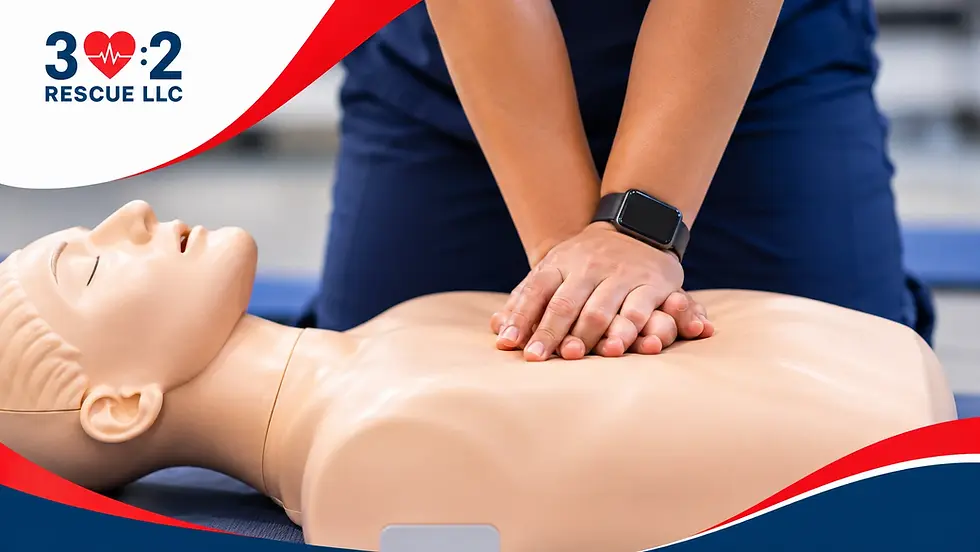
At 30:2 Rescue, you practice on professional mannequins and AED trainers. This lets you learn correct hand placement, compression depth, pacing, and when rescue breaths are used. It also helps you understand how infant techniques differ from adult techniques under current CPR guidelines.
During practice, you work on skills such as:
● Chest compressions for infants, children, and adults
● Rescue breaths with proper timing and chest rise
● AED use and age-appropriate response steps
Skills assessment is included, so you leave knowing you completed more than a lecture. You completed practical training.
Step 4: Receive Your CPR Certification and Know When to Renew
After you complete the class and skills assessment, you receive your CPR certification quickly. At 30:2 Rescue, your digital certification card is emailed within 10 minutes of course completion.
If you want a physical certification card, it is available on request. This fast turnaround is useful if you need proof of training for caregiving, school, volunteer work, or peace of mind at home. The process is simple and efficient.
Certification is valid for two years. Before it expires, you should take a renewal course to stay current and keep your skills fresh. Refresher courses matter because CPR guidance changes over time, and confidence improves when you practice regularly rather than waiting too long.
How Is CPR Different for Infants, Children, and Adults? (With Comparison Table)
CPR is performed differently on infants, children, and adults because body size, fragility, and force needs are different. That is why child CPR, infant CPR, and adult CPR are taught as separate techniques in a proper class.
AED training also changes by age, especially for younger patients. A hands-on course helps you learn those differences safely and clearly.
Age Group | Compression Depth | Hand Position | Rate | Rescue Breaths |
Infant (under 1) | Shallower compressions for a small chest | One hand or encircling thumbs technique | Push hard and fast at the trained rate | Gentle breaths, just enough to make the chest rise |
Child (1 to puberty) | Deeper than infant, less force than adult | One or two hands, based on child size | Push hard and fast at the trained rate | Slightly larger breaths than for an infant |
Adult | Stronger compressions to support blood flow | Two hands in the center of the chest | Push hard and fast at the trained rate | Standard trained breaths when appropriate |
Checklist: Is your family emergency-ready?
At least one caregiver has current CPR certification.
You know who will call 911 in an emergency.
Your family knows basic choking response steps.
You have reviewed AED awareness in public places you visit.
Your certification is not close to expiration.
Conclusion
In conclusion, CPR training is essential for grandparents and caregivers as it equips you with crucial skills to handle emergencies effectively. At 30:2 Rescue LLC, we provide accredited courses tailored for family members in Pasadena, ensuring you gain hands-on experience that prepares you for real-life situations. Our flexible class formats—whether instructor-led, blended, or mobile—make it easy to find the right option for your busy schedule. Don’t wait until an emergency occurs; act now to protect your loved ones. Enroll today at 30:2 Rescue or reach out to us at thirty2tworescuellc@outlook.com to secure your spot in a class that could make all the difference.
Frequently Asked Questions
How long is CPR certification valid for caregivers?
CPR certification for caregivers is valid for 2 years. Before your certification card expires, you should complete a renewal course. Regular refresher courses help you stay current with updated guidance and keep your response skills more confident and practical.
Can I take a CPR class online, or is in-person training required?
You can complete part of a CPR class through blended learning, but in-person skills practice is required for certification. 30:2 Rescue does not offer fully online-only certification classes. That approach matches hands-on training standards used in the American Heart Association and similar programs.
What is included in a mobile CPR class for families?
A mobile CPR class brings training to your home, office, or facility on request. Families receive hands-on practice, AED use training, course materials, and skills assessment. This option is convenient for group learning and can help families review broader emergency readiness, including their first aid kit.
How do I renew my CPR certification with 30:2 Rescue LLC?
To renew your CPR certification with 30:2 Rescue LLC, enroll in a renewal-appropriate CPR course before your current certification expires. Since certifications last 2 years, planning ahead is smart. Refresher courses help you maintain current skills and stay ready to give professional help until EMS arrives.


Comments