
Hands-Only CPR vs Traditional CPR: Which Is More Effective?
Apr 8
13 min read
Updated: Apr 11

Key Highlights
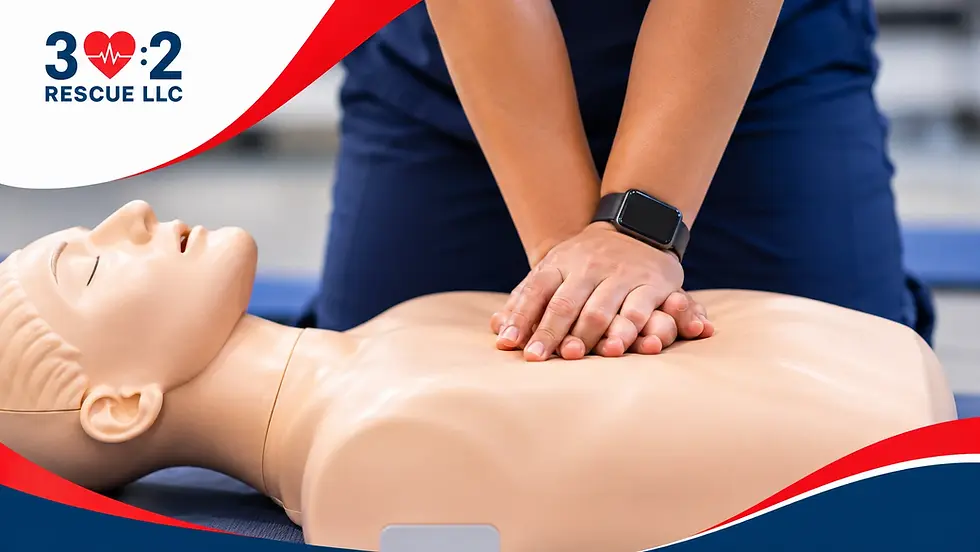
Hands-only CPR involves continuous chest compressions without rescue breaths.
Traditional CPR combines chest compressions with mouth-to-mouth rescue breathing.
For adults experiencing sudden cardiac arrest, hands-only CPR can be just as effective as traditional CPR, often leading to better survival rates.
Bystanders are often more willing and confident performing hands-only CPR.
Traditional CPR with rescue breaths is recommended for infants, children, and victims of drowning or drug overdose.
Knowing either technique can significantly increase a person's chance of survival during a cardiac emergency.
Introduction
Have you ever wondered what you would do if someone suddenly collapsed in front of you? Witnessing a cardiac arrest can be frightening, but your immediate action could save a life. Cardiopulmonary resuscitation (CPR) is a critical first aid skill, and calling for medical assistance is essential if you are unsure which method to use: hands-only or traditional CPR. This guide will walk you through the differences between these two life-saving techniques, helping you understand which is more effective in various emergency situations and empowering you to act with confidence.
Understanding Hands-Only CPR and Traditional CPR
Cardiopulmonary resuscitation (CPR) is a vital emergency procedure that healthcare providers need to be familiar with, but not all CPR techniques are the same. The two primary methods you'll hear about are hands-only CPR and traditional CPR. Each has a specific role depending on the situation and the rescuer's training level.
Understanding the distinction is key to providing the most effective help. We'll explore what each of these CPR techniques involves and when they are most appropriate to use, ensuring you have the knowledge to make a difference.
What Is Hands-Only CPR?
Hands-only CPR is a simplified version of resuscitation that involves performing continuous chest compressions without stopping to give rescue breaths. Introduced in 2008, this technique was designed to make it easier for untrained bystanders to intervene during a sudden cardiac arrest. The main difference between hands-only CPR and traditional CPR is the absence of mouth-to-mouth breathing.
The American Heart Association promotes hands-only CPR because it removes a major barrier for bystander CPR: hesitation. Many people feel uncertain about performing rescue breaths correctly or are reluctant to do so. By focusing solely on chest compressions, you can keep oxygenated blood flowing to the person's vital organs until emergency help arrives.
For an adult or teen who has suddenly collapsed, their blood already has enough oxygen for the first few minutes. The most critical action is to circulate that blood with hard and fast chest compressions. This makes hands-only CPR a powerful and effective tool for the general public.
What Is Traditional CPR With Rescue Breaths?
Traditional CPR, also known as conventional CPR, combines chest compressions with rescue breaths. The standard procedure involves a cycle of 30 chest compressions followed by two instances of mouth-to-mouth breathing. This method is what most people learn in a formal CPR training course.
The purpose of rescue breaths is to supply oxygen to the lungs. The chest compressions then circulate this oxygenated blood to the brain and other vital organs. This combination is crucial in specific situations where a lack of oxygen is the primary cause of cardiac arrest.
While studies show hands-only CPR is as effective as traditional CPR for adults who experience sudden cardiac arrest, especially in the first few minutes of cardiac arrest, conventional CPR is preferred for infants and children. It is also the recommended method for adults in cases of drowning, drug overdose, or respiratory failure, as these situations require immediate oxygenation.
Key Differences Between Hands-Only CPR and Traditional CPR

The primary distinction between the two CPR methods lies in their components. Hands-only CPR focuses exclusively on one action: delivering uninterrupted chest compressions. In contrast, conventional CPR is a two-step process that alternates between chest compressions and rescue breaths.
This fundamental difference impacts how and when each method is used. Understanding these key differences will help you determine the best course of action in a cardiac emergency. Let's look closer at the techniques and the scenarios where each is most beneficial.
Chest Compressions vs. Mouth-to-Mouth Breathing
The core of any CPR process is maintaining blood circulation. Chest compressions achieve this by manually pumping the heart to push blood to the brain and other organs. Pushing hard and fast on the centre of the chest plays a crucial role in saving a life after sudden cardiac arrest.
Mouth-to-mouth breathing, or rescue breaths, serves a different function: it provides oxygen. In traditional CPR, this mouth ventilation is combined with compressions. The main difference is simple:
Hands-Only CPR: Focuses solely on chest compressions.
Traditional CPR: Includes both chest compressions and rescue breaths.
Goal of Compressions: To circulate existing oxygenated blood.
Goal of Breaths: To add more oxygen to the blood.
While rescue breaths are important in certain cases, research shows that pausing compressions to give breaths can reduce the effectiveness of CPR for adults who collapse suddenly. Continuous compressions ensure a steady flow of blood, which can be more beneficial in the initial minutes of a cardiac arrest.
Comparing Techniques for Different Emergency Scenarios
The choice between hands-only and traditional CPR, which is a form of CPR, often depends on the cause of the cardiac emergency and the victim's age. The comparative outcomes show that one method isn't universally better; rather, each has its place to maximise survival chances.
Hands-only CPR is generally recommended for bystanders who witness a teen or adult suddenly collapse. In these situations, the person's blood is likely still oxygenated, and the immediate priority is circulation.
However, traditional CPR is preferred in other scenarios. Here’s a quick guide on when to use each:
Hands-Only CPR: Recommended for teens and adults in cases of sudden cardiac arrest.
Traditional CPR: Advised for infants and children.
Traditional CPR: Better for victims of drowning, drug overdose, or respiratory issues.
Traditional CPR: Necessary for anyone who has been unconscious for several minutes before being found.
When Should You Use Hands-Only CPR?
Knowing when to perform hands-only CPR can make a huge difference in an emergency. This method is specifically recommended for bystanders who see a teenager or an adult suddenly collapse. In these instances of sudden cardiac arrest, immediate and continuous chest compressions are the most effective way to help until emergency services arrive.
The simplicity of hands-only CPR makes it an ideal technique for untrained individuals or those whose training is not recent. We will now explore how to recognise cardiac arrest and the specific guidelines for bystanders to follow.
Recognising Cardiac Arrest in Adults
Recognising the signs of cardiac arrest is the first step in providing effective first aid. When an adult's heart stops beating suddenly, they will collapse, become unresponsive, and stop breathing normally. As an untrained bystander, your immediate action is crucial.
You should use hands-only CPR instead of traditional CPR with breaths if you see a teen or adult suddenly collapse. Look for these clear signs to confirm it's a cardiac arrest:
The person is not responsive when you shout at them or gently shake their shoulders.
They are not breathing at all.
They are only taking occasional, gasping breaths (known as agonal breathing).
If you witness these signs, don't hesitate. Call 911 immediately and start hands-only CPR. Any attempt to help is better than doing nothing. Your quick response can double or even triple the person's chance of survival.
Guidelines for Bystanders
The American Heart Association and the American College of Cardiology strongly encourage bystander response in a cardiac emergency. Experts recommend hands-only CPR for bystanders because it is simple to remember and perform, which increases the likelihood that people will act. A lack of confidence is a major reason people hesitate, and this basic life support technique helps overcome that fear.
If you see a teen or adult collapse, follow these simple steps:
Step 1: Call 911 immediately. If someone else is nearby, tell them to call 911 and your local emergency services and find an automated external defibrillator (AED).
Step 2: Place the person on their back on a firm, flat surface.
Step 3: Push hard and fast in the centre of the chest at a rate of 100 to 120 compressions per minute.
Step 4: Continue compressions until first responders arrive or an AED is ready to use.
By focusing only on chest compressions, you provide vital support without the complexity of rescue breaths. This straightforward approach empowers bystanders to become immediate lifesavers.
Effectiveness of Hands-Only CPR in Saving Lives

Multiple observational studies have confirmed the life-saving potential of hands-only CPR. When performed by a bystander in the first few minutes of cases of cardiac arrest, this technique is as effective as traditional CPR for adults. Research even suggests it can lead to better outcomes.
Higher survival rates to hospital discharge have been observed in patients who received hands-only bystander CPR. This success is tied to the continuous nature of the chest compressions. We'll examine the success rates more closely and clear up some common myths.
Success Rates for Adults in the United States
In the United States, research has shown that hands-only CPR significantly boosts the likelihood of survival for adults who suffer cardiac arrest outside of a hospital. When every second counts, the immediate action of a bystander in the critical moments of a cardiac arrest is a crucial link in the chain of survival. Studies comparing the two methods have found compelling results.
An analysis of multiple trials revealed that patients who received hands-only CPR from a bystander had a higher chance of survival to hospital discharge compared to those who received traditional CPR. This suggests that for witnessed adult cardiac arrests, continuous chest compressions are highly effective, a view that aligns with recommendations from the American Society of Anaesthesiology.
The effectiveness of hands-only CPR is often attributed to the uninterrupted blood flow it provides. Below is a simple comparison based on research findings:
CPR Method | Survival Outcome for Adult SCA | Neurological Outcome |
Traditional CPR | Slightly lower survival rates in some studies | Pauses for breaths may reduce blood flow |
Hands-Only CPR | Higher survival rates at hospital discharge | Often results in better neurological function |
These findings highlight just how effective hands-only CPR can be in increasing survival chances.
Common Myths and Facts
Many CPR myths can cause hesitation during an emergency. Understanding the facts helps ensure you follow the correct procedure and provide the most effective method of care.
One common myth is that you can harm someone by performing CPR. In reality, the risk of injury is low compared to the certainty of death if nothing is done. Another myth is that any CPR is better than none, which is true, but using the wrong method for certain health conditions can be less effective.
Here are some key facts to remember:
Myth: You need to be certified to perform CPR.
Fact: Anyone can perform hands-only CPR. It's better to act than to do nothing.
Myth: You must perform rescue breaths for CPR to work.
Fact: For teens and adults, hands-only CPR is just as, and sometimes more, effective.
Myth: You should stop CPR if you hear cracking sounds.
Fact: Ribs can fracture during compressions, but you should continue to save the person's life.
Fact: Hands-only CPR is not recommended for infants, children, or victims of drowning, where respiratory issues are the primary concern.
Using Traditional CPR: When Are Rescue Breaths Necessary?
While hands-only CPR is a powerful tool, there are specific situations where rescue breaths are essential. The traditional method, which includes rescue breathing, is designed to address cardiac arrests caused by a lack of oxygen. In these cases, providing air to the lungs is just as critical as circulating blood.
Understanding when to switch from hands-only to the traditional method can significantly improve a person's chance of survival. Let's explore the scenarios where rescue breaths are absolutely necessary, such as with children and in cases of drowning or overdose.
Responding to Child and Infant Cardiac Arrest
When it comes to paediatric CPR, rescue breaths are critically important. Unlike adults, whose cardiac arrests are often caused by heart problems, children and infants usually suffer cardiac arrest due to respiratory issues like choking or drowning. This means they desperately need oxygen.
For this reason, hands-only CPR is not recommended for children and infants. The correct procedure is traditional CPR, which combines chest compressions with rescue breaths. If you are trained, you should perform a cycle of 30 compressions to 2 breaths.
Here are the key points for paediatric CPR:
Always include rescue breaths for children and infants if you are able.
For an infant, use two fingers in the centre of the chest for compressions.
For a child, use one or two hands for compressions, depending on their size.
If you are untrained or unwilling to perform rescue breaths, performing chest compressions alone is still better than doing nothing.
Cases Involving Drowning, Drug Overdose, or Respiratory Issues
There are specific situations where hands-only CPR is not the recommended approach, even for adults. These are cases where cardiac arrest is caused by a lack of oxygen, making rescue breathing a critical component of resuscitation.
Incidents like drowning, drug overdose, and choking all lead to respiratory issues that stop oxygen from getting into the body. In these scenarios, the heart stops because it's starved of oxygen. Simply performing chest compressions won't be enough because there is no oxygen in the blood to circulate.
Traditional CPR with rescue breaths is essential in the following situations:
Victims of drowning
Individuals who have had a drug overdose
Cardiac arrest caused by suffocation or choking
Anyone found unconscious and not breathing due to prolonged respiratory issues.
In these cases, providing oxygen through rescue breathing is vital to give the person the best chance of survival.
Training, Preparation, and Accessibility for the Public
Being prepared for an emergency is key, and CPR training makes life-saving skills accessible to everyone. While formal training in a first aid course is ideal, the simplicity of hands-only CPR means that even without a certificate, you can still help. The goal is to empower as many people as possible to act confidently.
Greater accessibility to training and information is crucial for improving bystander intervention rates. Let's look at whether you need formal certification to perform hands-only CPR and how you can easily learn and practise this vital skill.
Do You Need Formal Certification for Hands-Only CPR?
No, you do not need special training or a formal CPR certification to perform hands-only CPR. This life-saving technique was specifically designed for untrained bystanders to use in an emergency. The goal is to remove barriers and encourage immediate action, as doing something is always better than doing nothing.
While a first aid course provides comprehensive knowledge, the core steps of hands-only CPR are simple enough to be learned and remembered by anyone. The American Heart Association and other health organisations have made instructions widely available to ensure greater public access to this skill.
So, if you witness a teen or adult collapse, you shouldn't hesitate because you lack a certificate. Your willingness to step in and start chest compressions can be the crucial factor in saving their life until professional help arrives.
How to Learn and Practice Hands-Only CPR
Learning hands-only CPR is quick and easy. While taking a full first aid course is the best way to gain confidence and learn advanced skills, you can learn the correct procedure for this basic life support technique in just a few minutes.
The key steps to correctly perform hands-only CPR are straightforward. You just need to remember to call for help and then push hard and fast on the chest.
Here’s a simple breakdown of how to learn and practise:
Watch instructional videos: Many reputable organisations, like the American Heart Association, offer short, easy-to-follow videos online.
Remember the rhythm: practise pushing to the beat of a song with 100-120 beats per minute, like "Stayin' Alive" by the Bee Gees.
Attend a short training session: Look for community events or CPR training kiosks that offer quick, hands-on practice.
Enrol in a first aid course: For the most comprehensive training, sign up for an accredited course that covers all aspects of CPR and first aid.
Benefits and Limitations of Hands-Only CPR
Hands-only CPR offers significant benefits, especially for lay responders. Its simplicity encourages more bystanders to provide first aid, which directly improves survival chances for people experiencing sudden cardiac arrest. By removing the hesitation associated with rescue breaths, it empowers more people to act.
However, it's also important to recognise its limitations. There are specific scenarios where hands-only CPR is not the most effective method. Understanding both the advantages and the drawbacks will help you make the best decision in a critical moment.
Advantages of Hands-Only CPR for Lay Responders
For lay responders, the biggest benefit of hands-only CPR is its simplicity. It's an effective method that is easy to remember and perform under pressure, which encourages immediate action. This is crucial because bystander CPR can dramatically increase a person's chance of survival.
Many people are hesitant to perform traditional CPR due to a lack of confidence or an unwillingness to perform mouth-to-mouth resuscitation. Hands-only CPR removes these barriers, making it more likely that someone will step in to help.
The advantages for lay responders are clear:
Easy to Learn: The steps are simple and can be learned quickly.
Builds Confidence: People are more willing to perform compressions than give breaths.
No Risk of Contagion: It eliminates direct contact with the person's mouth.
Highly Effective: For adult sudden cardiac arrest, it is just as effective as traditional CPR.
Potential Drawbacks and Situations to Avoid Hands-Only CPR
Despite its benefits, hands-only CPR has limitations and is not suitable for every critical incident. Medical professionals are trained to assess a situation and provide the most appropriate care, but bystanders should be aware of when this simplified method is not the best choice.
The main drawback is the lack of rescue breaths. In health conditions where the primary problem is a lack of oxygen, chest compressions alone are not enough. The person's blood doesn't have oxygen to circulate, making ventilation essential.
You should avoid hands-only CPR in the following situations:
Infants and Children: Their cardiac arrests are usually due to respiratory problems.
Drowning Victims: They need oxygen immediately.
Drug Overdoses: Breathing is often suppressed, requiring rescue breaths.
Choking or Suffocation: These are respiratory emergencies where oxygen is the priority.
In these cases, traditional CPR with rescue breaths should be performed if you are trained and able to do so.
Conclusion
In conclusion, understanding the differences between hands-only CPR and traditional CPR is crucial for saving lives during emergencies. By prioritising immediate chest compressions, hands-only CPR simplifies the process for bystanders, making it a highly effective technique in adult cardiac arrest situations. However, it's essential to recognise when traditional CPR, including rescue breaths and conventional CPR techniques, is necessary, particularly in cases involving children or specific medical conditions. With proper training and preparation, anyone can become a lifesaver. So, if you're looking to equip yourself with life-saving skills, consider getting certified in CPR today. Your knowledge could make all the difference in an emergency!
Frequently Asked Questions
What are the key differences between hands-only CPR and traditional CPR?
The key differences are in the technique. Hands-only CPR involves continuous chest compressions without any pauses. Traditional CPR combines a cycle of 30 chest compressions with two rescue breaths. Hands-only is simpler and removes the step of mouth-to-mouth breathing, making it easier for bystanders to perform.
In what situations is hands-only CPR recommended over traditional CPR?
Hands-only CPR is recommended for bystander CPR when a teenager or adult has a sudden cardiac arrest. This basic life support technique is ideal for untrained individuals providing first aid, as its simplicity encourages immediate action while waiting for emergency services to arrive.
How effective is hands-only CPR compared to traditional CPR in saving lives?
For adults experiencing sudden cardiac arrest situations, comparative outcomes show hands-only CPR is as effective as traditional CPR and may even improve survival rates. The continuous compressions increase the likelihood of survival by maintaining blood flow, making it a highly effective form of cardiopulmonary resuscitation for bystanders.
How effective is hands-only CPR in increasing survival rates after cardiac arrest?
Hands-only CPR is highly effective at increasing survival rates, particularly when a bystander response is immediate. Studies show that this form of immediate cardiovascular care action can double or triple a person's chances of survival to hospital discharge after a sudden cardiac arrest, proving its life-saving value.


Comments