
Comparing Blended vs In-Person BLS Training Options
May 26
12 min read
Updated: May 31

Key Highlights
Basic Life Support (BLS) training is crucial for healthcare providers and first responders during an emergency response.
The American Heart Association (AHA) provides guidelines for both online and in-person BLS training formats.
Online BLS courses offer flexibility, while in-person training provides essential hands-on skills practice.
A blended learning approach, combining online coursework with an in-person skills session, is a popular option for BLS certification.
Choosing the right training format depends on your learning style, professional requirements, and need for practical experience.
Proper BLS training improves patient outcomes and prepares you to act confidently in a cardiac emergency.
Introduction
Are you looking to get your Basic Life Support (BLS) certification but are unsure which training format is right for you? With options ranging from fully online to traditional in-person classes, making a decision can be confusing. This guide will compare online and in-person BLS course options, helping you understand the pros and cons of each. By exploring the standards set by the American Heart Association, you can choose a path that fits your needs and ensures you receive high-quality, life-saving training.
Understanding BLS Training: The Basics
Basic Life Support (BLS) is the foundational level of medical care for individuals experiencing life-threatening emergencies, such as cardiac arrest. It provides healthcare providers and trained responders with the skills to act quickly and effectively until advanced medical help arrives.
The core of BLS training is learning how to perform high-quality cardiopulmonary resuscitation (CPR) and use an automated external defibrillator (AED). Let's explore what BLS entails and who can benefit from this essential training.
What Is Basic Life Support (BLS)?
Basic Life Support (BLS) is a set of life-saving techniques used to support circulation and breathing during a medical emergency. It is a critical component of the emergency response system, designed to be performed by trained individuals to improve survival rates for victims of cardiac arrest. The primary focus is on maintaining blood flow to the brain and other vital organs.
The core of BLS involves cardiopulmonary resuscitation (CPR), which includes chest compressions and rescue breaths. The key steps in the AHA BLS algorithm for adult basic life support start with ensuring scene safety, checking for responsiveness, and activating emergency services. This is followed by assessing breathing and pulse before beginning CPR.
Additionally, BLS training covers proper AED use. An automated external defibrillator is a portable device that can analyze a person's heart rhythm and deliver an electrical shock if a life-threatening arrhythmia is detected. Using an AED promptly can restore a normal heart rhythm and significantly increase the chances of survival.
Who Needs BLS Training in Pasadena and What Does It Cover?
BLS training in Pasadena is essential for a wide range of individuals, particularly healthcare providers and first responders. Professionals who are often required to have BLS certification include doctors, nurses, paramedics, EMTs, dental professionals, and firefighters. AHA guidelines require healthcare professionals to be proficient in recognizing and responding to a cardiac emergency.
This training is also valuable for anyone in a public-facing role, such as teachers, fitness trainers, and security personnel, who may be the first to respond in an emergency. A quality training center will equip you with the skills to handle these situations confidently.
A comprehensive BLS course covers several key topics to prepare you for real-world scenarios:
High-quality CPR for adults, children, and infants
The AHA Chain of Survival
Effective use of an Automated External Defibrillator (AED)
Team dynamics in a multi-rescuer resuscitation
Overview of BLS Certification and AHA Guidelines
Obtaining a BLS certification means you have successfully completed a course that adheres to the strict standards set by the American Heart Association (AHA). This certification validates your ability to perform life-saving techniques according to the latest evidence-based practices. A recognized training center will ensure its curriculum follows the official BLS algorithm.
The AHA regularly updates its guidelines to reflect the latest science in resuscitation. These guidelines are the gold standard for BLS training and are followed by credible institutions worldwide.
Key Components of BLS Certification
To get an official BLS certification based on AHA standards, you must demonstrate proficiency in both knowledge and practical skills. The certification process is designed to ensure you can act effectively in a real emergency, which directly impacts patient survival rates.
The training emphasizes hands-on practice, particularly with high-quality chest compressions and the use of an automated external defibrillator (AED). You will learn the correct rate, depth, and technique for compressions to maximize blood flow to vital organs.
Key requirements for earning your BLS certification include:
Completing the course curriculum, which covers the BLS algorithm.
Passing a written or online exam to test your theoretical knowledge.
Successfully performing required skills during a hands-on skills test.
Demonstrating proficiency in team-based resuscitation scenarios.
What’s New in the 2025 AHA BLS Guidelines?
The American Heart Association periodically updates its guidelines to incorporate the latest research and improve patient outcomes. The latest AHA guidelines for 2025 build upon previous versions, refining best practices to enhance the effectiveness of bystander and professional responses to cardiac arrest.
These updates often focus on optimizing the quality of CPR, streamlining algorithms for faster intervention, and integrating new technologies or data. One key difference from previous versions might be a stronger emphasis on post-cardiac arrest care and minimizing interruptions during chest compressions.
Key updates in the 2025 AHA BLS guidelines may include:
A refined framework for rapid recognition of cardiac arrest.
Updated compression-to-ventilation ratios for specific patient populations.
New recommendations for emergency response priorities to maximize survival.
Comparing Blended vs In-Person BLS Training Options

When deciding on BLS training, you'll find two primary formats: online and in-person. Each offers a different approach to learning the essential skills of life support. Many individuals and organizations, including those looking for group training options, must weigh the benefits of each format to determine the best fit.
A reputable AHA training center like 30:2 Rescue LLC can provide guidance on which path aligns with your needs, whether you prefer the flexibility of digital learning or the hands-on nature of a traditional classroom. We will now look at the structure of each and the pros and cons.
Structure and Approach: Online vs In-Person Learning
The structure of online BLS training typically involves self-paced modules, videos, and quizzes that you can complete on your own schedule. This format covers the cognitive portion of the course. However, for an official AHA certification, you must also complete an in-person skills testing session at a recognized training center.
In contrast, in-person BLS training combines the theoretical learning and hands-on practice in a single, instructor-led session. This traditional classroom setting provides immediate feedback and allows for group interaction and dynamic scenario practice from start to finish.
The AHA guidelines offer options for BLS certification through either a blended learning path (online course + in-person skills) or a full in-person course. Here’s a comparison:
Feature | Online BLS Training (Blended) | In-Person BLS Training |
Learning Environment | Self-paced online modules, completed anywhere | Instructor-led classroom setting at a training center |
Flexibility | High; learn at your own pace and schedule | Low; fixed class schedule and location |
Hands-On Practice | Conducted during a separate, mandatory skills testing session | Integrated throughout the course with instructor guidance |
Instructor Interaction | Limited to the in-person skills session | Continuous interaction and immediate feedback |
Pros and Cons of Each Training Format
Choosing between online and in-person life support training depends on individual learning preferences and professional requirements. Online courses offer great flexibility, which is a major advantage for busy healthcare professionals. You can progress through the material at your convenience before attending a brief skills session.
However, the major drawback of a purely online format (one without a skills test) is the lack of hands-on practice, which is critical for mastering the effectiveness of CPR. In-person training provides this direct experience, with instructors correcting your technique in real-time. This format is also ideal for group training options where team dynamics can be practiced. While both AHA and Red Cross BLS certifications are widely recognized, employers may prefer one over the other, so it's always best to check requirements.
Here are some key points to consider:
Online Pros: Flexible, convenient, self-paced learning.
Online Cons: Requires a separate skills session; less instructor interaction.
In-Person Pros: Immediate feedback, hands-on practice, team-based scenarios.
In-Person Cons: Less flexible scheduling, may take longer to complete.
Examining Blended BLS Training in Pasadena
Online BLS training in Pasadena offers a modern approach to certification, providing easy access to course materials for busy professionals and other website visitors. The American Heart Association's HeartCode BLS is a prime example of this blended learning model, combining the convenience of online learning with essential hands-on practice.
This format allows you to complete the cognitive portion of the training at your own pace. Then, you schedule a brief in-person session to demonstrate your skills, ensuring you are fully prepared to respond in an emergency.
How Online BLS Training Works
Online BLS training works through a two-part process known as blended learning. First, you complete the cognitive portion of the course online. This includes watching videos, reading materials, and passing interactive quizzes and simulations designed to teach the theoretical aspects of emergency response. Yes, there are many online resources available to help you study the AHA BLS algorithm, and the official AHA online course is the most comprehensive.
After successfully finishing the online module, you will receive a certificate of completion. You must then schedule the second part of the training: an in-person skills testing session. This hands-on evaluation is a mandatory step for receiving an official BLS certification card.
The process is straightforward:
Enroll in an AHA-approved online course, like HeartCode BLS.
Complete the online modules at your own pace.
Attend a scheduled in-person session at a training center like 30:2 Rescue LLC to demonstrate your skills and receive your certification.
Recognized Platforms for Blended BLS Certification
When seeking online BLS certification, it is crucial to choose a program that is accredited and widely accepted by employers. The most recognized and respected providers are the American Heart Association (AHA) and the American Red Cross. Courses from these organizations follow evidence-based guidelines and are the standard in the healthcare industry.
Accredited BLS courses that follow AHA guidelines can be found through the official AHA website, which lists authorized training centers. At 30:2 Rescue LLC, we are an authorized AHA training center, offering the HeartCode BLS program. This course allows you to complete the online portion directly through the AHA and then finish your certification with our in-person skills test.
To ensure your certification is valid, look for courses from these providers:
American Heart Association (AHA) - HeartCode BLS
American Red Cross - Blended Learning Courses
Authorized AHA Training Centers like 30:2 Rescue LLC
Other platforms affiliated with reputable healthcare organizations
Exploring In-Person BLS Training in Pasadena

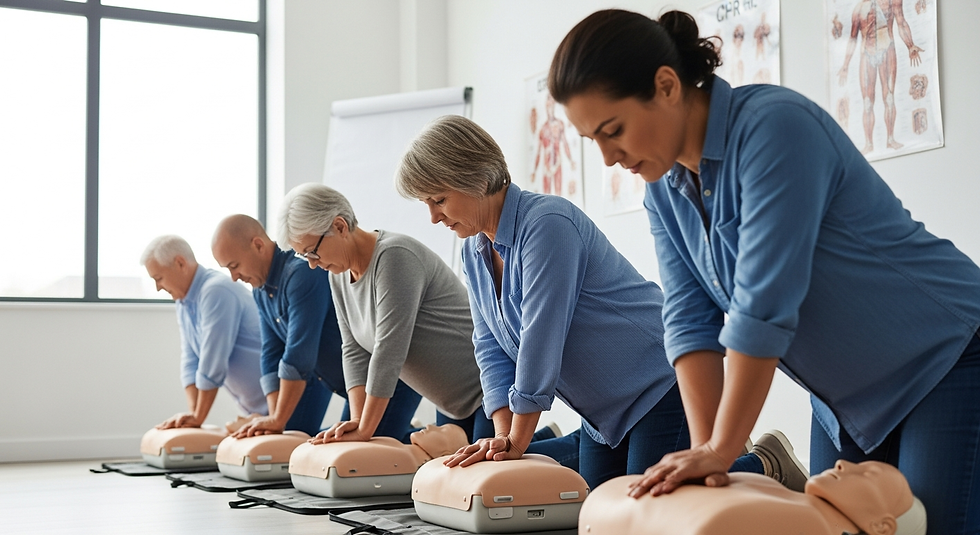
In-person BLS training in Pasadena offers a traditional, hands-on approach to learning life-saving skills. This format is ideal for learners who thrive in a structured classroom environment and value direct interaction with instructors. At a reputable training center, you will practice essential techniques on manikins and simulate real-life emergency response scenarios.
This method ensures you develop the muscle memory and confidence needed to act decisively during a crisis. Let's look closer at the benefits of classroom-based learning and how to find local classes that meet rigorous standards.
Hands-On Skills Sessions and Classroom Experience
The classroom experience in an in-person BLS course is centered around hands-on training. This practical approach is vital for mastering skills like chest compressions, where proper depth and rate are necessary to maintain blood flow to the brain and heart. Under the direct supervision of a certified instructor, you receive immediate feedback to correct your technique.
This interactive setting also allows you to ask questions and engage in discussions with the instructor and fellow students. The main requirements for BLS training for healthcare professionals under AHA guidelines include demonstrating proficiency in these skills during a final testing scenario, ensuring you are prepared for real-world emergencies.
Key benefits of the classroom experience include:
Practicing on high-quality manikins that provide real-time feedback.
Engaging in team-based resuscitation scenarios.
Mastering the use of AEDs and bag-mask devices through guided practice.
Local BLS Classes That Meet AHA Standards
Finding local BLS classes that meet AHA standards is essential for healthcare professionals and anyone else seeking a valid certification. Accredited courses ensure that the training you receive is up-to-date, evidence-based, and recognized by employers and licensing boards. You can find these courses by searching the official AHA training center locator.
30:2 Rescue LLC is proud to offer in-person BLS training in Pasadena that fully complies with AHA standards. Our courses are led by experienced instructors dedicated to providing high-quality, hands-on education. We focus on building your confidence so you can provide effective lifesaving care when it matters most.
When searching for accredited local BLS classes, ensure the provider:
Is an authorized American Heart Association (AHA) training site.
Uses certified instructors and official AHA curriculum.
Provides a valid AHA BLS certification card upon successful completion.
Which Option Meets the AHA BLS Certification Requirements?
Both blended learning (online + in-person skills) and fully in-person courses can meet the AHA guidelines for BLS certification. The critical requirement that unites both formats is the mandatory, in-person, hands-on skills session. A certification from a course that is 100% online with no skills test will not be recognized by the AHA or most employers of health care professionals.
Therefore, whether you start online or in a classroom, your path to a valid BLS certification must include a practical evaluation by a certified instructor. This ensures you can perform life-saving skills effectively before you need to use them in a real emergency.
Evaluating Curriculum and Instructor Qualifications
When choosing a BLS course, it is vital to evaluate the curriculum and instructor qualifications to ensure the training is legitimate and effective. A compliant curriculum will be based on the latest AHA guidelines, covering all essential topics, from high-quality CPR to disease control precautions.
To get an official BLS certification, you must train with a provider that uses AHA-certified instructors. These instructors have undergone rigorous training themselves and are qualified to teach the material and assess your skills accurately. At 30:2 Rescue LLC, our instructors are certified and experienced, ensuring you receive the highest quality education.
Before enrolling in a course, verify the following:
The course follows the current AHA curriculum.
Instructors are certified by the AHA.
The training provider is an authorized AHA Training Site or Center.
The course includes a hands-on skills session.
Evaluation and Testing for BLS AHA Guidelines Compliance
To ensure compliance with AHA guidelines, every BLS certification requires a thorough evaluation and testing process. This process assesses both your cognitive understanding of the BLS algorithm and your physical ability to perform the skills. AHA-approved BLS classes cover a wide range of topics, including the Chain of Survival, CPR for all ages, AED use, and team dynamics.
The testing component consists of two main parts. First, a written exam tests your knowledge of the course material. Second, and most importantly, a hands-on skills test requires you to perform CPR and use an AED on a manikin. An instructor will evaluate your performance to ensure you meet the required standards for rate, depth, and technique.
Key elements of the evaluation include:
A written test with a minimum passing score.
A practical skills test demonstrating high-quality chest compressions.
A simulated scenario assessing your ability to integrate all steps of the BLS algorithm.
Conclusion
In conclusion, choosing between online and in-person BLS training options ultimately depends on your learning style, schedule, and comfort level. Both formats offer unique advantages, from the flexibility of online courses to the hands-on experience of in-person classes. Understanding the key components of BLS certification and ensuring that your chosen method meets AHA guidelines is crucial for effective training. At 30:2 Rescue LLC, we are committed to providing high-quality CPR training and BLS certification in Pasadena that aligns with the latest AHA standards. If you're ready to enhance your life-saving skills and gain confidence in your abilities, consider enrolling in one of our programs today.
Frequently Asked Questions
How do I choose between blended and in-person BLS certification?
Choose online BLS training for flexibility if you're comfortable with self-directed learning, but remember you'll need a skills test. Opt for in-person BLS training if you prefer a structured environment with direct instructor feedback. Your choice should align with your learning style and the requirements of your training center.
Will hospitals in the United States accept online-only BLS courses?
No, most hospitals and healthcare professionals' employers in the United States will not accept an online-only BLS course. A valid BLS certification must include a hands-on skills session that follows American Heart Association guidelines. An online-only course lacks this critical component for a valid certification.
Does AHA recognize 30:2 Rescue LLC as a certified BLS training center in Pasadena, CA?
Yes, 30:2 Rescue LLC is an authorized American Heart Association (AHA) training center. Our BLS training in Pasadena follows all AHA guidelines for CPR, rescue breaths, and AED use, ensuring your certification is nationally recognized and focused on improving patient outcomes.
What topics are covered in AHA-approved BLS classes?
AHA-approved BLS classes cover the full BLS algorithm for responding to cardiac arrest. Key topics include high-quality chest compressions, rescue breathing, AED use, the Chain of Survival, and team resuscitation dynamics, all based on the latest AHA guidelines to maximize survival rates.
Can CPR certification in Pasadena, CA align with the latest AHA BLS guidelines?
Yes, CPR certification in Pasadena, CA from an authorized AHA provider like 30:2 Rescue LLC aligns with the latest AHA guidelines. Our courses ensure your skills in responding to cardiac arrest meet the standards required for both CPR and BLS certification, preparing you for a confident emergency response.
What are the 7 steps of BLS?
The BLS algorithm for a cardiac emergency involves: 1) ensuring scene safety, 2) checking for responsiveness, 3) shouting for help and activating emergency response, 4) checking for breathing and pulse, 5) starting 30 chest compressions, 6) giving 2 rescue breaths, and 7) using an AED for rapid defibrillation.
What are the new BLS guidelines?
The new BLS guidelines from the AHA continue to refine best practices for medical professionals. They emphasize high-quality CPR, early AED use, and effective team dynamics. Updates also address special considerations, including disease control measures to ensure rescuer safety while providing care.
What are the AHA CPR guidelines for 2026?
The AHA updates its guidelines every five years, so specific AHA CPR guidelines for 2026 are not yet released. However, they are expected to continue focusing on improving survival chances by optimizing CPR quality, post-resuscitation care after the return of spontaneous circulation, and strategies for managing heart rhythm disturbances.
What is the golden rule of BLS?
The golden rule of BLS is early recognition and immediate action. As soon as you identify someone in cardiac arrest, start the Chain of Survival without delay. Every second counts, and acting fast by starting high-quality CPR dramatically increases the person's chances of survival.
What are the options for BLS certification according to the AHA guidelines?
According to AHA guidelines, there are two main options for BLS certification. You can take a traditional, fully in-person course at a training center or a blended learning course (online theory + in-person skills test). Both are accepted by healthcare providers and EMS agencies.
Where can I find accredited BLS courses that follow AHA guidelines?
You can find accredited BLS courses that follow AHA guidelines at authorized training centers like 30:2 Rescue LLC. You can also search for local providers on the official American Heart Association website. We offer courses for individual health care professionals and provide group training options.


Comments